
How To Reveal The Smart Pattern In Your Own Data
You publish something on a Tuesday. It does well. You publish something almost identical the following month, and it barely gets a glance.
Nobody tells you why. You are left wondering whether it was the headline, the timing, the platform, or simply luck nobody can explain. So you guess again next week, and the guessing never really stops.
Here is the useful bit. The answer is usually sitting in your own data, not in another article telling you what “works in 2026”. Every email you have sent, every post you have published and every page you have built already contains a record. It shows what your actual audience responds to.
You do not need a marketing degree to read that record. You need a reason to look at it properly, and a little help organising what you find. That is where AI earns its place, once the guessing stops and the checking starts.
The Problem With Asking For Ideas Instead Of Answers
Ask any AI tool what you should write about next and it will happily oblige. Ten ideas, fifteen ideas, as many as you like.
The trouble is, none of those ideas know your audience. They are generic suggestions dressed up as personalised advice, and thousands of other people are being handed the same list this week.
There is a better question to ask, and it starts with information only you have.
Why This Matters More When You Are Starting Again
I spent twenty-five years in subsea engineering before I ever wrote a word of marketing. One thing stayed with me from that career. You do not touch a system until you understand the whole thing. It’s rather like a map maker who needs to see the full landscape before giving anyone directions.
Building a business later in life, often after redundancy, rarely comes with that luxury. You are learning the landscape and walking it at the same time. Every hour spent guessing is an hour you cannot really afford to lose.
This is also where a lot of people get seduced by the promise of an easy shortcut. A course that claims the guesswork has already been solved for you; it hasn’t. The shortcut that works is cheaper, slower, and entirely your own: your own past results.
What Counts As Your Own Data
You probably have more of this than you think, even with a small list or a modest handful of published posts.
Email open rates and click rates, if you use an autoresponder such as eShowcase to send and track them. Page views on your own site. Comments, replies and the odd message from someone who read the thing properly.
None of that needs to be dramatic. Twenty emails sent over three months is already enough of a pattern to learn something from. A handful of blog posts with modest traffic will still show you which subjects people stayed to finish. It also shows which ones they abandoned halfway down the page.
If you want a sense of how small, overlooked details affect whether a reader even gets that far, other articles I have shared recently go into some of the specific mistakes. They waste a reader’s attention before you ever reach the data stage.
Ask AI Better Questions Than “What Should I Post?”
Once you have gathered what you have, the exercise itself is simple.
Export whatever you can: dates, subject lines or titles, topics, and whatever engagement numbers your system gives you. Then hand that to an AI tool and ask it to look for patterns, not ideas.
Useful questions look like this. Which topics consistently beat my average. Which pieces got replies rather than silence. What do my weakest results have in common.
The answer is usually sitting in your own data, not in another article telling you what works in 2026.
That last question is often the most useful one. A weak result rarely fails for one obvious reason. It is usually a small, repeatable mistake, and once AI flags it across several examples, you stop making it by accident.
You can push this further once you trust the process. Ask it which subjects you have barely covered despite them quietly performing well. That gap is often your next month of content sitting right there, rather than another list of fifteen generic ideas.
Build One Small Habit, Not A New Job
You do not need a dashboard, a subscription, or a second system to manage. You need a habit you will keep.
Once a month, pull your last batch of results. Ask AI the questions above. Write down whatever pattern shows up, even if it is only one sentence long.
Before your next piece goes out, show the draft to the same AI tool. Ask it to compare the draft against what has worked before, based only on your own history. Then publish it anyway, and note what happens.
Over a few months that becomes a loop. Publish, measure, ask, adjust, publish again.
It is a modest habit, and it is also one most people never build. Checking your own results feels far less exciting than chasing the next new tactic someone else is selling.
Where Your Judgment Still Has To Do The Work
To be very clear, none of this replaces your own thinking. AI can spot a pattern across fifty emails faster than you ever could. It cannot tell you whether that pattern is true for your audience next month, or whether it simply caught a coincidence.
Treat what it finds as a strong hint, not a verdict. Test it once more before you build an entire strategy around it.
That is really the whole shift. You stop asking what might work for somebody else’s audience, and start reading the evidence your own audience has already left you. People who build something lasting later in life tend to be the ones who become masters of their own destiny. That’s largely because they pay attention to exactly this kind of detail rather than skipping past it for the next shiny idea.
Where To Start This Week
Pick one source of your own results, even a small one. Pull the last three months. Ask AI those three questions, and see what comes back.
You might be surprised how much is already sitting there, waiting to be read properly rather than guessed at again.
I hope you found this useful.
Mark
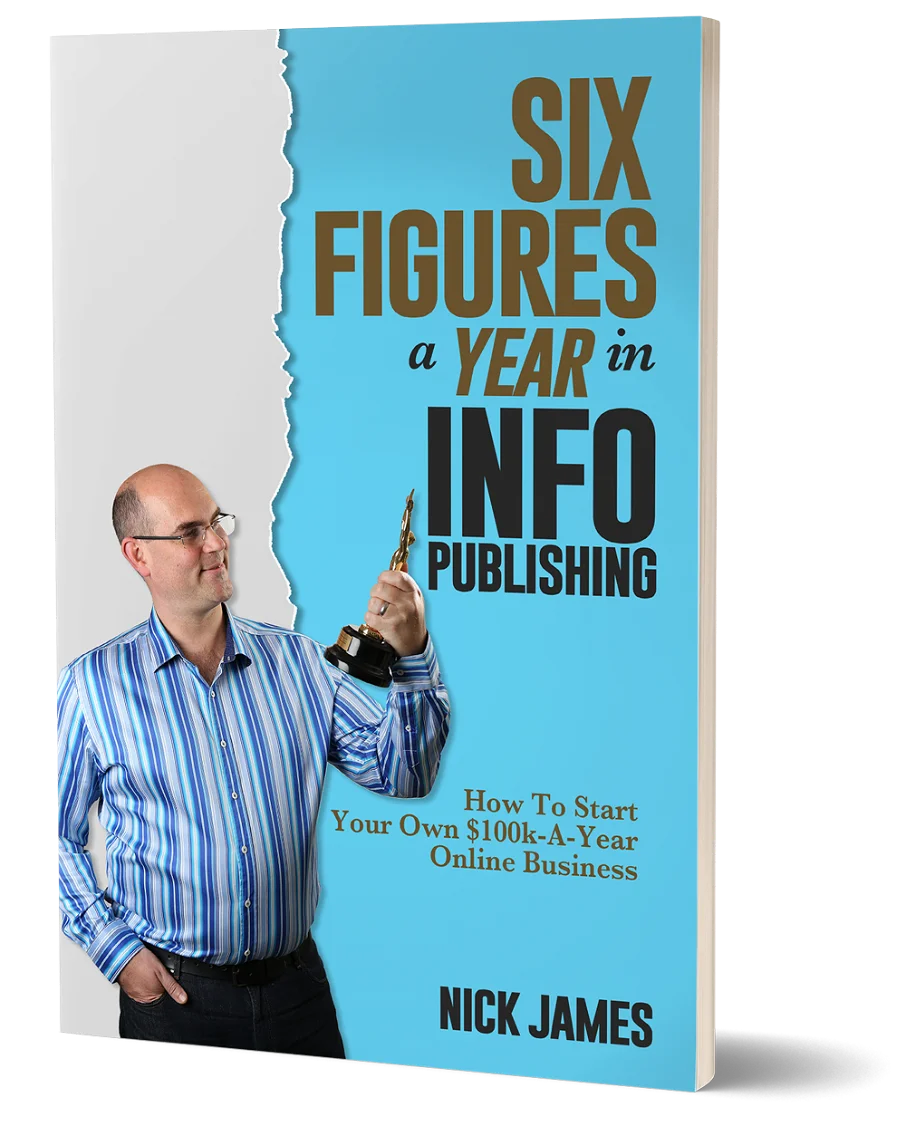
Author offers a FREE copy of this book to his next door neighbor... to prove he's not a drug dealer!
Now claim your FREE COPY.
and follow the step-by-step instructions for making the kind of money (and living the kind of lifestyle) that'll get your neighbors curtains twitching with curiosity!
Enter your details below to discover how to claim your FREE COPY of 'Six Figures A Year In Info Publishing' ...
Privacy Policy : We value your privacy. You can unsubscribe from receiving future emails with 1 click at any time.