
The Unexpected Reason Pricing Too Low Is Quietly Costly
Here is a number many new business owners settle on without quite noticing why they chose it: whatever feels safe enough not to lose sleep over, and nothing more. For a lot of people coming out of a corporate career later in life, that number is almost always lower than it should be.
I understand the instinct. After twenty-five years of a salary decided by someone else, setting your own price for the first time feels unfamiliar.
It’s like standing in a shop window with nothing but a hand-written sign. Pricing too low feels like the responsible choice. It is not.
There’s a reason that instinct runs so deep. Underpricing feels like damage control, a way of hedging against the risk that nobody wants what you’re offering at all. It rarely works that way in practice.
A price set out of fear rather than confidence does more than cost you money. It changes who buys from you, how they treat the relationship, and whether your business can ever replace the income you lost. If you are weighing up what to charge for your next offer, this is worth reading first.
The Simple Arithmetic Behind A Low Price
Picture two ways of reaching the same £24,000 a year from one offer. At £20 a sale, you need 1,200 buyers to get there. At £200, you need 120.
That gap between 1,200 buyers and 120 isn’t just a number on a spreadsheet. It’s the difference between chasing strangers all year and having real time to serve the people who already said yes.
Finding one buyer takes roughly the same effort whichever price you choose. A low price does not just leave money sitting on the table. It multiplies how many people you need to find, using the same amount of effort, to reach the same result.
Price is never neutral.
That single fact changes how most people would price their next offer, if they ever stopped to work it out.
Most do not. They set a number that feels comfortable, launch, and spend the next year wondering why growth feels so hard. Pricing too low was working against them before the first sale ever came in.
Where This Caught Me Out
I went round to a number of local businesses in person, offering to help them apply some of the newer AI search techniques. They said no. Fair enough; I was not an established agency and I had no track record to point to.
It took me the best part of a year to get my confidence back and build the basics properly. That’s much the same way it takes time to trust your own price once somebody has told you no.
Here is the part I did not expect. Once I had put a proper offer back together, the temptation was to price it low. A smaller number, it seemed, could make up for the knock my confidence had taken that year.
It is not confidence that sets a fair price. It is the other way round.
A price that reflects what you deliver is what lets you stand behind it. That’s a different kind of confidence to the one I was missing that year.
What A Low Price Tells A Buyer, Whether You Mean It Or Not
An unusually low price can raise a question in a buyer’s mind before they have read a word of what you are offering. What is wrong with it?
There is a principle worth borrowing here, and it applies well beyond any one business or event. A price does a job no conversation can do as well: it filters.
Raise a price properly and some people will step back, put off by the number alone. The people who stay tend to be the ones ready to commit, rather than the ones who only wanted to be in the room cheaply.
I have written about pricing fears before, in other articles I have shared recently, because the pattern repeats across almost every business I have studied.
The Customers A Low Price Attracts
A very low price does not just affect your income. It changes who buys from you.
People who join at a bargain price sometimes expect a level of support no reasonable price could ever cover. That is not unkind of them. The number itself told them it was mostly free, so they treat it that way.
They did not choose carelessly; the price simply told them what kind of relationship this was going to be, and they believed it.
When your price properly reflects what you deliver, you attract people ready to commit, not people testing whether something works for almost nothing. The whole relationship starts on steadier ground than a bargain ever builds.
Think about the last time you bought something suspiciously cheap. Did you trust it fully, or did you quietly wonder what the catch was? Your own customers ask themselves the same question about you.
A Quiet Check Worth Running
Look at your current offer plainly. Are people going quiet after their first purchase?
Does support feel heavier than the price justifies? Have you ever hesitated to ask someone to pay what the work is worth?
Any one of those is worth a second look at your number.
Fixing It Without Starting Over
None of this means tearing up your offer and beginning again. It means testing one honest increase on the next thing you sell, and watching what changes, not just in income but in who shows up.
Pick one offer. Raise the price by an amount that makes you slightly uncomfortable, not reckless. Then watch who shows up next, and how they behave once they’re in.
If you have already priced too high and the complaints are piling up, the fix is not to panic and drop the number. Add real value until the price feels fair again. A short walkthrough, one small bonus, a clearer explanation of what the buyer gets; none of it requires touching the core offer at all.
Either direction, this rarely means starting over. It means paying attention to what your price is telling your market, then adjusting it with intention instead of fear.
Think of it the way you would adjust a thermostat rather than rebuild the central heating. A small, deliberate change, watched carefully, works better than a wholesale replacement.
If building a serious business around pricing is the next step from here, Serious About Six Figures is worth a look. It’s Nick James’s own course on building a business from the ground up, rather than patching one together from whatever felt safe at the time.
I have not worked through it myself. But if you want a structured way to think through pricing decisions later in life, it’s a reasonable place to look.
None of this requires a spreadsheet or a rebrand. It just needs an honest look at the number you are currently charging, and whether fear or confidence chose it.
Price it for the business you are trying to build, not the one caution has been quietly talking you into.
I hope you found this useful
Mark
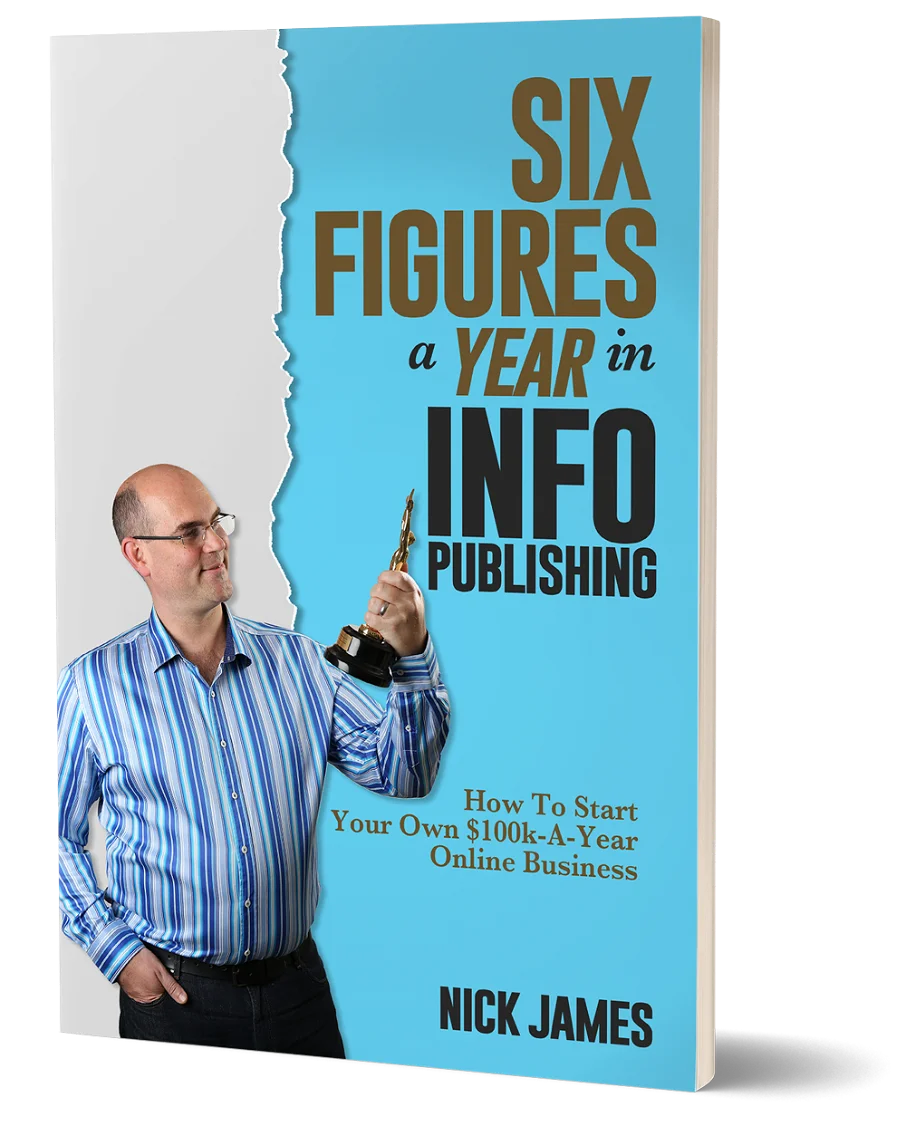
Author offers a FREE copy of this book to his next door neighbor... to prove he's not a drug dealer!
Now claim your FREE COPY.
and follow the step-by-step instructions for making the kind of money (and living the kind of lifestyle) that'll get your neighbors curtains twitching with curiosity!
Enter your details below to discover how to claim your FREE COPY of 'Six Figures A Year In Info Publishing' ...
Privacy Policy : We value your privacy. You can unsubscribe from receiving future emails with 1 click at any time.