The Little-Known Order That Saves Your Most Costly Hours
It’s half past eight on a Tuesday morning. Laptop open, coffee going cold, and there are thirty-one things on your list.
Two emails need an answer today. A client proposal is sitting at ninety percent finished. A whole bank of easy five-minute jobs is waiting to be cleared in one sitting.
You start with the easy ones. By eleven you’ve ticked off a dozen of them. The proposal is still sitting at ninety percent, exactly where it was yesterday.
This isn’t a time-management failure in the way most advice assumes. You worked for hours. You answered real messages, cleared a real backlog, and ended the morning with a tidy inbox. The one task that would have moved the business forward never got touched. Not because you avoided it, but because nothing on the page told you it mattered more than the rest.
I spent twenty-five years in subsea engineering, where one late task on a single part of a project could delay a whole platform coming online. That delay could run to months, not days. The industry has a name for sorting work properly: the critical path. Not every task on a schedule carries equal weight. The ones that look small can quietly cost you the most if you get the order wrong.
Your to-do list works the same way. It just never tells you which line deserves your best hour first. Sorting your to-do list properly, rather than simply clearing it, changes what your day produces.
Why A List Doesn’t Rank Itself
A flat list is a pile, not a plan. Nothing about the order it’s written in tells you which item matters most today.
So most of us default to whatever feels loudest or easiest. A notification pulls your eyes to your phone. A quick job sits there half finished from yesterday, practically begging to be closed out.
None of that is a discipline problem. It’s simply that nobody ever showed us a real way to sort a list against itself.
Picture someone running a one-person consultancy who spends the first hour of every day on their inbox, because that’s where the noise is. By midday the inbox is clear and the one deliverable that earns them money hasn’t been touched. Nothing they did was wrong exactly, it just wasn’t ranked.
Clearing five small things off a page feels like progress, and in a narrow sense it is. But that feeling shows up whether or not any of those five things moved your business forward at all. Your brain enjoys the tick mark. Your business needs the result.
Borrowing From The Critical Path
On a subsea project, dozens of separate work packages run at once: design, procurement, fabrication, offshore installation. Most of them have some slack built in. Slip by a week and the project barely notices.
A handful of tasks have none. Delay one of those, and everything scheduled behind it slips by exactly the same amount. Engineers call that sequence the critical path. It’s the first thing reviewed in any project meeting, before anyone talks about the easier work running alongside it.
I once sat through a review where a single delayed valve delivery pushed an entire offshore installation window back by six weeks. A dozen other tasks on the same project quietly slipped at the same time, and nobody minded at all. The valve was on the critical path. The others weren’t. That difference is everything.
It took me years in the industry to stop assuming every red flag on a schedule deserved equal panic. Most of them didn’t. The valve did. Learning to tell the two apart, quickly and without a committee meeting, is most of what the job involved.
A working day has exactly the same structure, even though nobody draws it out on a chart. A small number of tasks, if left undone today, truly cost you tomorrow. Everything else has some slack in it, whether it feels that way at nine in the morning or not.
A small number of tasks, if left undone today, truly cost you tomorrow.
Three Questions That Sort Your List
You don’t need a new app or a fresh set of coloured folders for this. You need to ask three questions about each item before you touch any of it.
First: does it have a real deadline, with a real cost attached if you miss it? A client call already booked. A payment due this afternoon. These go first, before the inbox is even opened.
Second: is it already close to finished, and does finishing it pay you? A proposal at ninety percent earns you something the moment it’s sent. A proposal left at ninety percent earns you nothing at all, no matter how many easy jobs you clear around it.
Third: does it belong to the small handful of things that really grow what you’re building? Writing the next piece of content, following up a genuine lead, building the page that earns the next opt-in. Everything else is maintenance, useful but replaceable.
Answer those three questions in order and the ranking does itself. This is the whole mechanic behind sorting your to-do list: not a new tool, just an order of operations applied before the day starts.
None of this takes long to apply. Read down tomorrow’s list once, mark each line against the three questions, and you’ll have your day ranked before the kettle’s boiled. The ranking is the whole point. Everything else, the doing of the work itself, stays exactly the same.
I keep a version of this sitting next to other things I’ve written recently about building a one-person business without losing whole days to busywork. The pattern underneath most of them is the same: sort before you start, not halfway through the morning.
What Happens To The Easy Stuff
The five-minute jobs still matter. Leave too many of them unfinished for too long and they pile up into a mess of their own, and a few of them really do have a hard deadline hiding inside them.
They simply don’t earn the right to go first.
Think about the five-minute jobs as a drawer you tidy every so often. Leave it closed for a week and nothing happens. Leave it closed for a month and you can’t find anything in it when you need to. The trick isn’t ignoring the drawer, it’s deciding when you open it.
Save them for the gaps: the ten minutes before a call starts, the last half hour before you log off. Let them fill the edges of the day rather than open it.
A Day Sorted Properly
Picture the same Tuesday, sorted this way instead. The two genuine deadlines go into the first block, before the inbox opens.
The proposal at ninety percent gets the next clear hour. Finishing it pays you sooner than eight new ideas further down the page ever will. The content piece that really builds the business gets protected time of its own.
The easy jobs are still there. They just wait their honest turn. Say the proposal takes ninety minutes to close out, and the content piece takes another sixty. That’s two and a half hours spent on the two things that move the business forward, done before lunch. The whole afternoon is left for the smaller jobs that had felt so urgent at nine o’clock.
Same list. Same number of hours in the day. A completely different Tuesday, built from one habit: sorting your to-do list before you touch a single line of it.
Try it on tomorrow’s list before you open your inbox. Ask the three questions, in order, against everything written down. You’ll likely find that most of what felt urgent this morning was never on the critical path at all. It was just loud, or easy, or already open on your screen.
I hope you found this useful
Mark
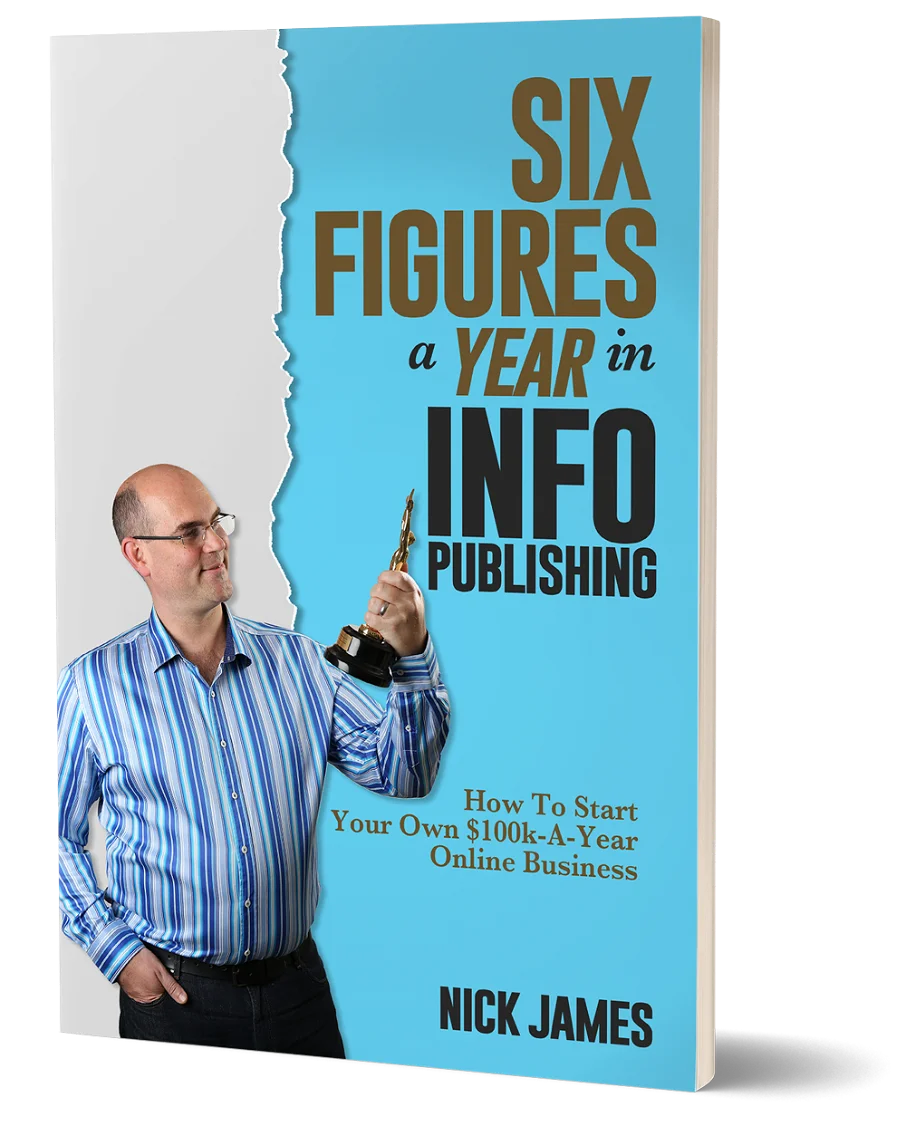
Author offers a FREE copy of this book to his next door neighbor... to prove he's not a drug dealer!
Now claim your FREE COPY.
and follow the step-by-step instructions for making the kind of money (and living the kind of lifestyle) that'll get your neighbors curtains twitching with curiosity!
Enter your details below to discover how to claim your FREE COPY of 'Six Figures A Year In Info Publishing' ...
Privacy Policy : We value your privacy. You can unsubscribe from receiving future emails with 1 click at any time.