
Doing Everything Yourself Is Secretly Wasting Your Time
You’ve looked at your own to-do list today and found the same three jobs sitting there as last Tuesday. Formatting a newsletter, chasing an invoice, tidying a spreadsheet nobody else will ever see. None of it moves your business forward. You do it anyway, because handing it to someone else feels like money you don’t have.
Here’s what that thinking misses. The hour you spent on that spreadsheet was never free. It simply never turned up as an expense, so you never noticed it leaving.
Most people building a business on their own end up doing everything yourself by default, not by decision. There was no moment where you sat down and chose to handle every job personally. It just quietly became the arrangement, one small task at a time.
The Task You Keep Doing For Free
Picture the job you dread most on your weekly list. Maybe it’s formatting an email. Maybe it’s reconciling the books, or writing out the same answer to a question you’ve already answered a dozen times.
You tell yourself it only takes an hour, so paying someone else feels wasteful.
Unpaid is not the same thing as free.
Every hour you spend on something someone else could handle is an hour you didn’t spend on the one thing only you can do: building the business itself.
The Napkin Math That Changes Everything
Here’s a simple calculation worth running against your own week.
Start with the income you’d like your business to bring in this year. Divide that by the hours you plan to spend getting there. That answer is roughly what your own time is worth per hour.
Say your target is £40,000 for the year, and you expect to put in 1,000 hours to reach it. Divide one by the other and your time is worth £40 an hour.
Now take any repeating task on your list and multiply the hours it eats by that figure. A job that costs you ten hours a month is quietly costing you £400, whether you ever write a cheque for it or not.
I’ve written more on running a solo business by the numbers you can see, rather than the ones you’ve trained yourself to ignore. You’ll find it in other articles I’ve shared recently. This particular bit of arithmetic turns up more often than you’d expect once you start looking for it.
One-Off Jobs Versus Jobs That Repeat
Before you decide anything, sort your list into two piles: things you’ll only ever do once, and things that come round every week or month.
A one-off job, like setting up a new page, only ever costs you that single block of hours. Handing it off saves you exactly that much, no more.
A repeating task behaves very differently. Ten hours a month sounds small until you stretch it across a full year. At £40 an hour, that same task quietly costs £4,800 annually, even though nobody ever sent you an invoice for it.
Three Honest Questions Before You Hand Anything Off
Doing everything yourself rarely survives contact with these three questions. The maths tells you what a task costs. It doesn’t always tell you whether to let it go.
First: are you good at this particular job, or merely capable of it? Being able to do something isn’t the same as being the best use of your own time on it.
Second: do you enjoy doing it? A task you dislike tends to sink to the bottom of your list anyway. That quietly raises its real cost even further than the sums above suggest.
Third: does it need to sound like you, specifically? A welcome email in your own voice probably belongs on your desk. The formatting behind it almost certainly doesn’t.
I’ll be straight with you: I’m still working through this myself. Twenty-five years as a Chartered Engineer taught me to understand a system fully before I trust it. That’s a useful instinct, except when it quietly becomes an excuse to keep doing every single job personally rather than letting anything go. Building Digital Upskill as a one-person operation means I’m the one formatting the page, chasing the admin, and checking the deliverability settings, all before lunch.
What The Hours You Get Back Are Worth
None of the above is really about money, even though the sums are useful for spotting which task to deal with first. Doing everything yourself was never really about saving money anyway.
Ten hours a month sounds small on paper. Across a year, it’s well over a hundred hours handed back to you. That’s a proper weekend most months, instead of one spent catching up on a spreadsheet.
You didn’t leave a corporate career, or start building something of your own later in life, to spend every evening doing the one job a freelancer could finish. That job would cost you less than the hour is worth to you. You did it to be among the people who become masters of their own destiny, in my own words, rather than at the mercy of someone else’s decisions.
If building the kind of recurring income business where you decide which tasks stay on your own desk, and which get handed off as it grows, is where you’re heading next, that’s worth knowing. Nick James lays out that whole picture inside Make Cash Like Clockwork. It’s worth a look if this article has left you wanting the fuller system rather than just the sums behind one task.
Pick one task from your own list this week. Run the maths against it properly. You might be surprised at what it’s been costing you all along, long before you ever thought to add it up.
I hope you found this useful
Mark
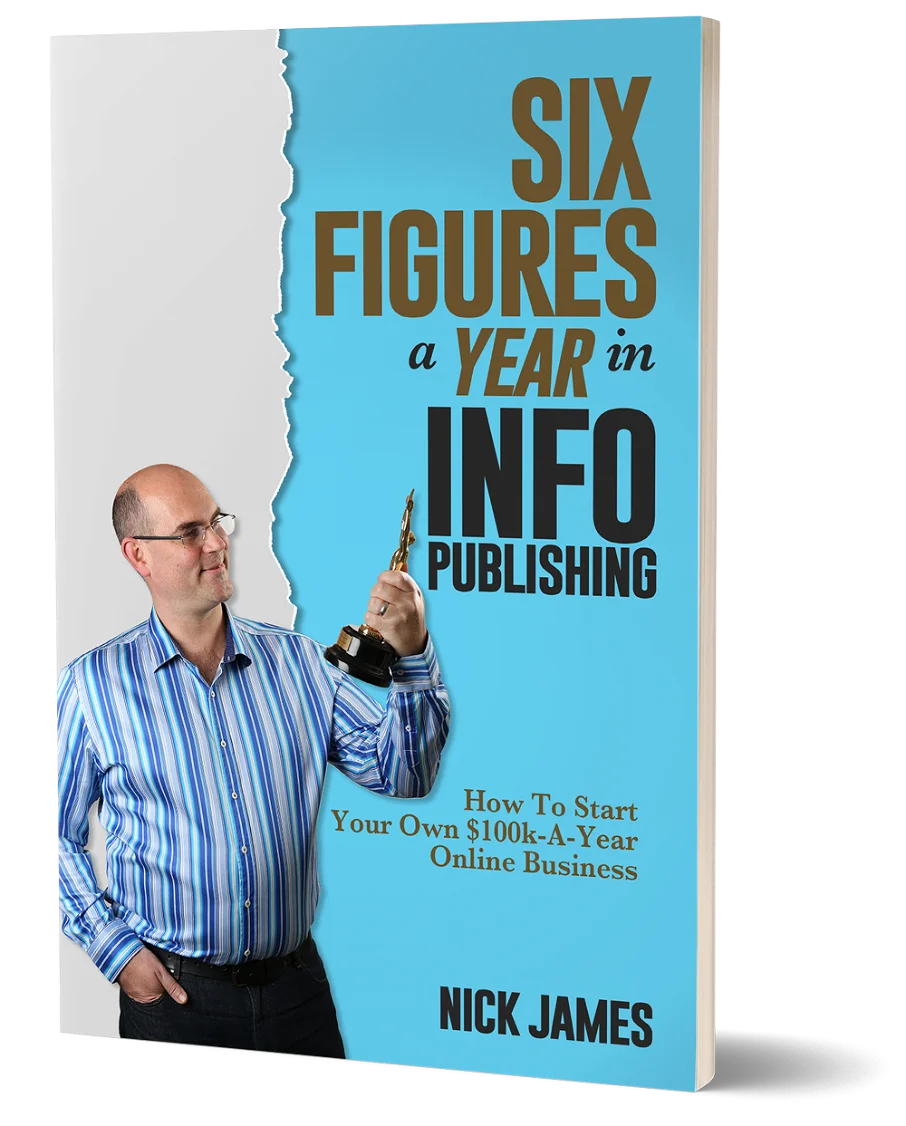
Author offers a FREE copy of this book to his next door neighbor... to prove he's not a drug dealer!
Now claim your FREE COPY.
and follow the step-by-step instructions for making the kind of money (and living the kind of lifestyle) that'll get your neighbors curtains twitching with curiosity!
Enter your details below to discover how to claim your FREE COPY of 'Six Figures A Year In Info Publishing' ...
Privacy Policy : We value your privacy. You can unsubscribe from receiving future emails with 1 click at any time.