6 Critical Ways To Answer A Price Objection Without A Costly Discount
Most pricing advice tells you the same thing: if someone hesitates, take a bit off and get the sale over the line before they change their mind. It sounds sensible. In my experience, and in what I have watched happen to other people trying to build something of their own, it is usually the wrong move entirely.
A price objection rarely means your price is wrong. It usually means something about the offer sitting around that price has not yet answered the question the buyer is quietly asking themselves.
Cut the price and you have patched a symptom. You have not touched the actual gap, and you have taught that buyer, and anyone they mention it to, that your number moves the moment somebody pushes on it.
There is a better way to answer a price objection, and none of it touches the figure on the page.
What A Price Objection Is Really Asking
There is a useful difference worth holding in your head here. Your product is the thing you built: the course, the guide, the service, the template.
Your offer is everything wrapped around it. The price, the payment options, the guarantee, whatever support comes with it.
Two people can sell the identical product and build two completely different offers around it. The one with the stronger offer tends to win the sale, sometimes at a higher price than the competitor charging less for the same thing.
Picture two people selling the same £200 course. One offers a bare purchase button. The other adds a thirty-day guarantee, three monthly payments, and a bonus workbook that expires in a week. The second seller can charge more and still close more sales, because the buyer is paying for certainty as much as content.
Which means when somebody pushes back on price, they are rarely arguing with the product itself. They are reacting to the offer as it currently stands in front of them.
That shift matters, because it hands you a lot more ways to answer than lowering a number ever could.
What I Noticed Buying Courses At £1,500 A Time
I have paid £1,500 or more for courses that looked brilliant on the page. It is only once you try to run the mechanics yourself that you find out how much of that price was carrying more than just information.
Much like a central heating system, an offer only reveals what it is actually made of once you switch it on and try to live with it. On paper it all looks tidy. In practice, some parts hold and some do not.
What I never once saw, across any of those purchases, was a discount offered to talk me into buying. What I saw instead were guarantees, payment plans spread across a few months, and bonuses that expired on a stated date rather than a vague one.
One course included a rolling three-month guarantee and a bonus call that expired within a fortnight. Another split payments across four months with no interest added. Neither dropped a penny off the sticker price to get me to buy.
Nobody selling me those courses cut the price to close the sale. They changed how safe or how convinced I felt about saying yes, and left the number exactly where it was.
I have circled back to this same pattern in other articles I have shared recently, because it shows up in almost every sale worth studying, not just courses.
Three Ways That Change How Safe It Feels
A guarantee removes the biggest reason anyone hesitates: risk. When the risk of buying feels smaller than the risk of walking away, the decision starts to make itself.
A trial does something similar, but earlier. Instead of asking a stranger to trust your claims, you let them test a small piece of the thing first. A short preview module, a sample chapter, or a single call before committing to the whole programme all do the same job. They replace a promise with an experience.
A payment plan answers a different question entirely. Not is this worth it, but can I manage this right now. Someone who cannot pay in one go is not always someone who doubts you. Splitting a single figure into three or four smaller ones often turns a no into a yes without changing what they pay in total.
A price objection is rarely an objection to your price. It is a reaction to the offer as your buyer currently sees it.
Three Ways That Change How Convinced It Feels
Specific proof does more work than vague praise ever will. A precise, plainly stated result beats a warm adjective every time, and it is worth remembering that most of us starting out have none of our own to show yet. That is where making the point plainly, rather than borrowing someone else’s figures, has to do the job instead.
A smaller version of your main offer catches the buyer who is interested but not ready. Keep it meaningfully different rather than the same offer with a few pounds removed. A short paid trial, a single module, or a stripped-down version built to solve one specific piece of the larger problem all work. Just make sure the buyer can see exactly how it connects to the bigger offer waiting behind it.
Genuine urgency is the last of the three, and the word doing the work there is genuine. A price that rises once a window closes is real. A bonus reserved for early buyers is real too. An invented countdown that quietly resets fools nobody twice, and it costs you every honest deadline you write after that one.
The One Question That Ends Most Discount Requests
Sometimes a request for money off is not really about the money. It is a test to see whether you will move.
Here is a question worth keeping in your back pocket. When someone asks for less than your price, ask them plainly: sure, what would you like me to take out?
Ask it warmly rather than as a challenge, and give them room to answer openly. Most people have never been asked this before, and the pause that follows tells you more than the answer itself.
The question works because it is true. Every part of your offer exists for a reason, and if the price drops, something has to come out with it.
Most people, faced with that, discover they never wanted a cheaper price at all. They wanted proof that the price in front of them was fair.
Building A Stronger Offer Around The Price You Already Have
None of this needs to happen all at once. Look at your own offer this week and notice which of these you already use by default, usually a guarantee and a testimonial or two, and which ones you have never tried.
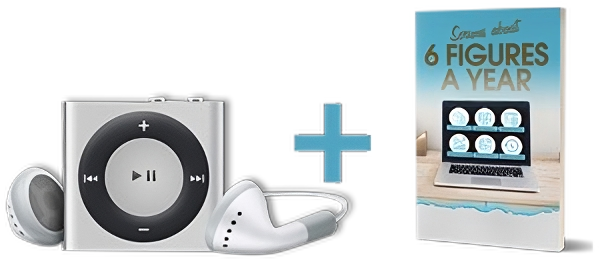
For anyone still working out what their first proper offer should look like, Serious About Six Figures walks through building one from the ground up, rather than bolting a price onto something half finished. It is not a shortcut, and it will not do the deciding for you, but if you want somewhere to go further with this, it is a reasonable next step.
A stronger offer will always outlast a lower price. The offer stays yours long after the discount has trained your buyer to wait for the next one.
Whichever one you choose, write it down somewhere you will see it before the next conversation with a hesitant buyer. That way it is a decision you have already made, not one you are making under pressure.
Pick one thing from this list and build it into the very next offer you put in front of somebody. That is usually enough to change what happens the next time a buyer hesitates.
Keep your wheels turning, Mark
Claim Your Free MP3 And PDF Training: The 3-Part Plan To Topping $100,000 Per Year In Profit
Enter your name and email address below to receive a new lesson delivered to your inbox once a week. Your first lesson will be delivered immediately.
Privacy Policy : We value your privacy. You can unsubscribe from receiving future emails with 1 click at any time.