
The Unexpected Reason Real Trust Always Comes Before the Sale
Most advice about building an online audience says the same thing. Build the list first. The sales will follow.
That is not quite true.
A list of names on a spreadsheet does not buy anything. What buys is buyer trust, earned in the right order, long before you ever ask for the sale.
If you are fifty plus and building something of your own after years in a corporate career, this matters more than it looks. You do not have a marketing department testing a hundred versions of the same email. You have one list, one reputation, and a limited amount of goodwill to spend. Get the order wrong and you do not just lose a sale. You lose the chance to ever sell to that person again.
The Order Nobody Checks
Somewhere along the way, a lot of us were taught that the offer does the work. Write a strong enough email, get the subject line right, and people buy.
Buyer trust does not arrive because the words were clever. It arrives because you gave something useful first, with nothing attached to it, before you ever asked for anything back.
Nick James, whose training first got me into this business, describes it as a goodwill bank. Every useful email or honest answer is a deposit. Every pitch is a withdrawal. His rule is to kiss your list regularly and hug them occasionally, roughly two thirds value to one third offer.
What buys is buyer trust, earned in the right order, long before you ever ask for the sale.
He tells the story of one of his own students, a man called Shane, who built a small front-end offer. Shane followed it up not with more pitches, but with a genuine check-in.
He asked one question a week after the sale: did this actually solve the problem you came here to fix? The follow-up offer he made afterwards did remarkably well. Nick is quick to say that particular result was exceptional, not typical, and depended on a good deal more than the email itself.
What Skipping It Actually Costs You
I found this out the expensive way, not the theoretical one.
Years ago I tried a well-known Google Ads approach that reduced an entire affiliate sales process down to the fewest possible clicks. The theory was elegant. The keyword targeting was anything but, and I ended up paying for a specialist automation service just to make sense of it. If you have ever handed a process over because it looked efficient on paper, you will recognise how that turns out.
It worked, in the sense that people bought. What it never did was capture a single email address. Every buyer went straight from the ad to the vendor’s page. Every future purchase from that same person went to the vendor too, and none of it ever came back to me. Your version of this mistake might look nothing like mine, but the shape is the same: a shortcut that removes the one asset worth keeping.
I had built no list at all, which meant I had no goodwill bank to make deposits into in the first place. There was nothing to earn trust with, because there was no relationship to build it on. A process that looks efficient can quietly remove the one thing that makes a business worth having: somewhere to keep the people who already said yes once. If your own funnel sends buyers anywhere but back to you, you are building someone else’s business with your own effort.
I have written a bit more about that kind of infrastructure gap in some of the other things I have shared recently. Read it if you want the fuller picture of how I put mine right afterwards.
Building The Account Before You Ask
You do not need a big list to start doing this properly. You need three habits, done consistently, long before the first pitch goes out.
Answer one honest question in public wherever your audience already gathers, and give the whole answer rather than saving the good part for later.
Share one specific, real detail about what has and has not worked for you. Vague reassurance does not build buyer trust. A specific admission does.
Follow up after somebody takes even a small first step with you, and check whether it actually helped. That single habit does more for trust than any clever subject line ever will.
Picture the version of this that actually happens: someone downloads your free guide, and three days later you send one line asking whether it made sense, not whether they want to buy anything yet. That is the whole habit. It costs you two minutes and tells the reader you were paying attention.
Getting the plumbing right matters here too. Once I finally set up a proper CRM to capture and keep in touch with people who opt in, I at least had somewhere for that goodwill to accumulate. I used eShowcase for hosting, email and follow-up. eShowcase will not build the relationship for you, but it gives the relationship somewhere to live.
Why This Suits A Business Built Later In Life
There is something in this that suits people coming to this later, after a career built elsewhere.
You already know how relationships work in business, because you spent decades watching them work, or fail to, in a corporate one. The instinct that says a favour given freely means more than one that comes with strings attached is not new to you. It is just a habit you have not yet applied to a list of subscribers.
Think about the colleague who always helped you prepare for a review, no strings attached, long before either of you needed anything from the other. That is the same account you are being asked to open now, just with subscribers instead of colleagues. The mechanism has not changed. Only the room has.
Trust rewards patience more reliably than clever writing ever does. That is worth remembering on the days when a launch feels slow, or when nobody has replied to the last three emails you sent. Deposits still count even when nobody says thank you for them.
Pick one platform this week. Give something useful with nothing attached to it, and notice what comes back before you ever ask for a sale. The asking gets a great deal easier once the trust is already sitting there waiting for it. Start small if you need to; the deposit still counts.
Keep your wheels turning,
Mark
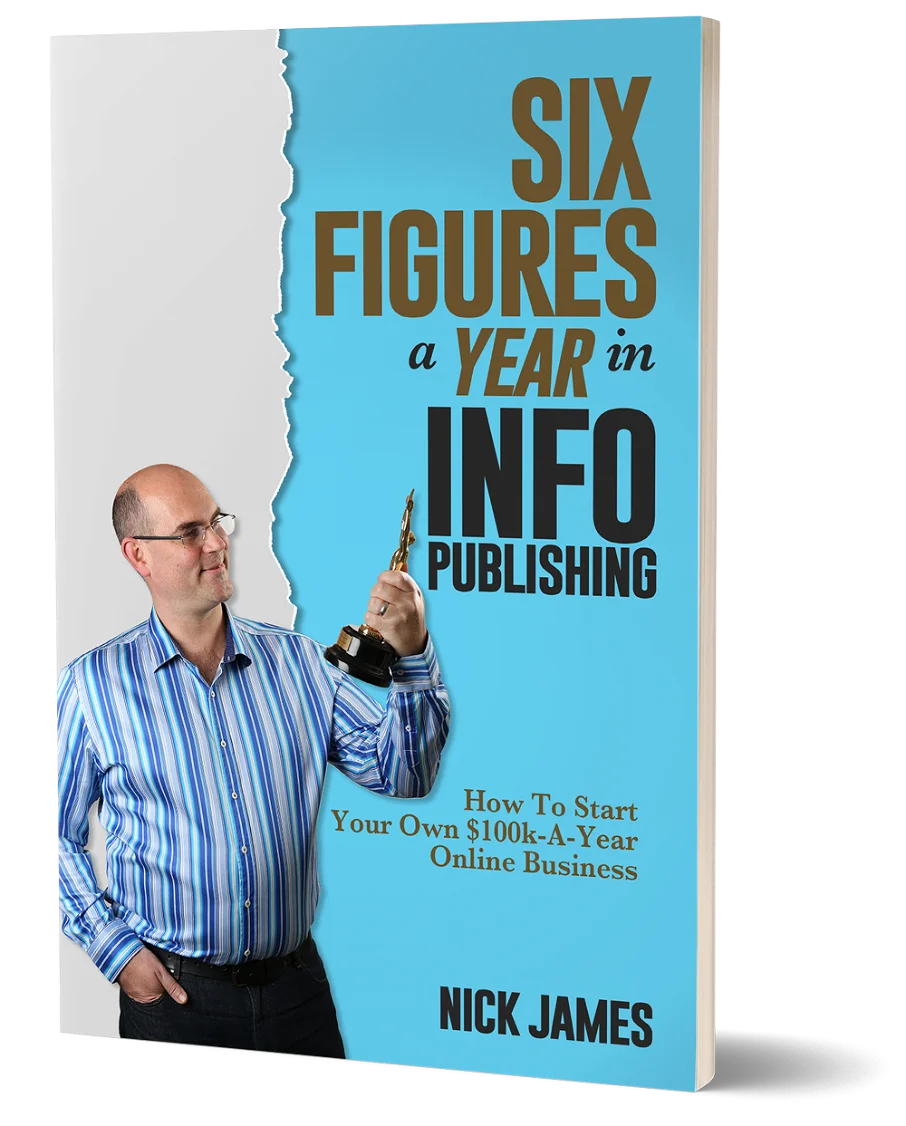
Author offers a FREE copy of this book to his next door neighbor... to prove he's not a drug dealer!
Now claim your FREE COPY.
and follow the step-by-step instructions for making the kind of money (and living the kind of lifestyle) that'll get your neighbors curtains twitching with curiosity!
Enter your details below to discover how to claim your FREE COPY of 'Six Figures A Year In Info Publishing' ...
Privacy Policy : We value your privacy. You can unsubscribe from receiving future emails with 1 click at any time.